Introduced Bon dance to North American communities from California to British Columbia
Overview
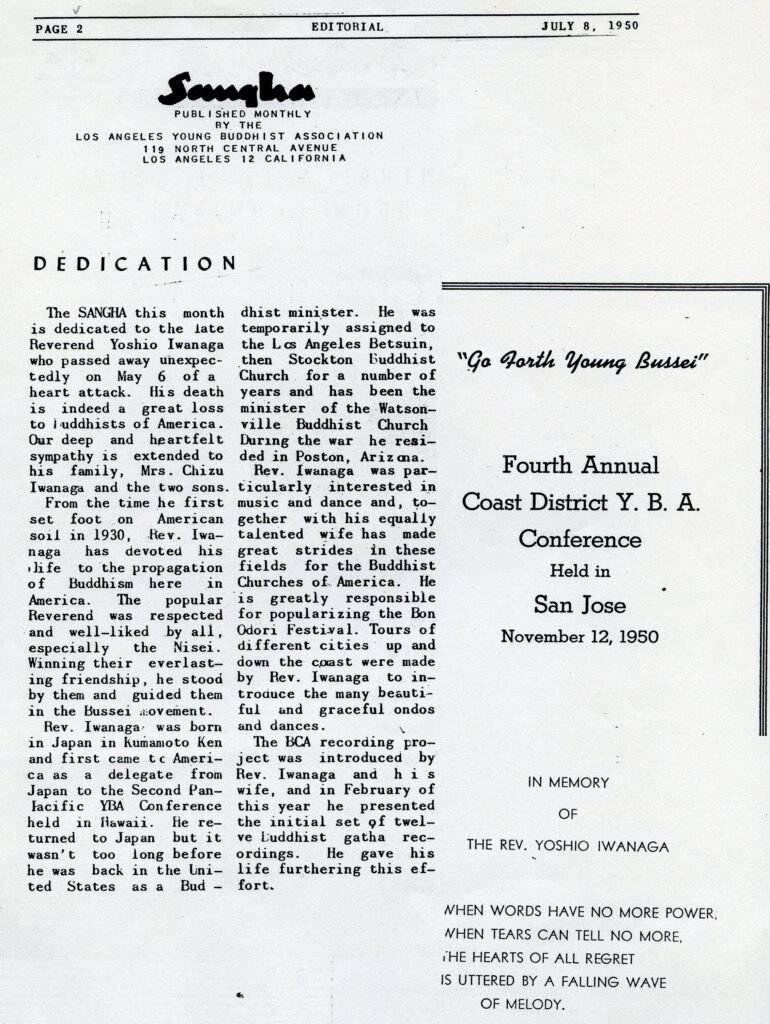
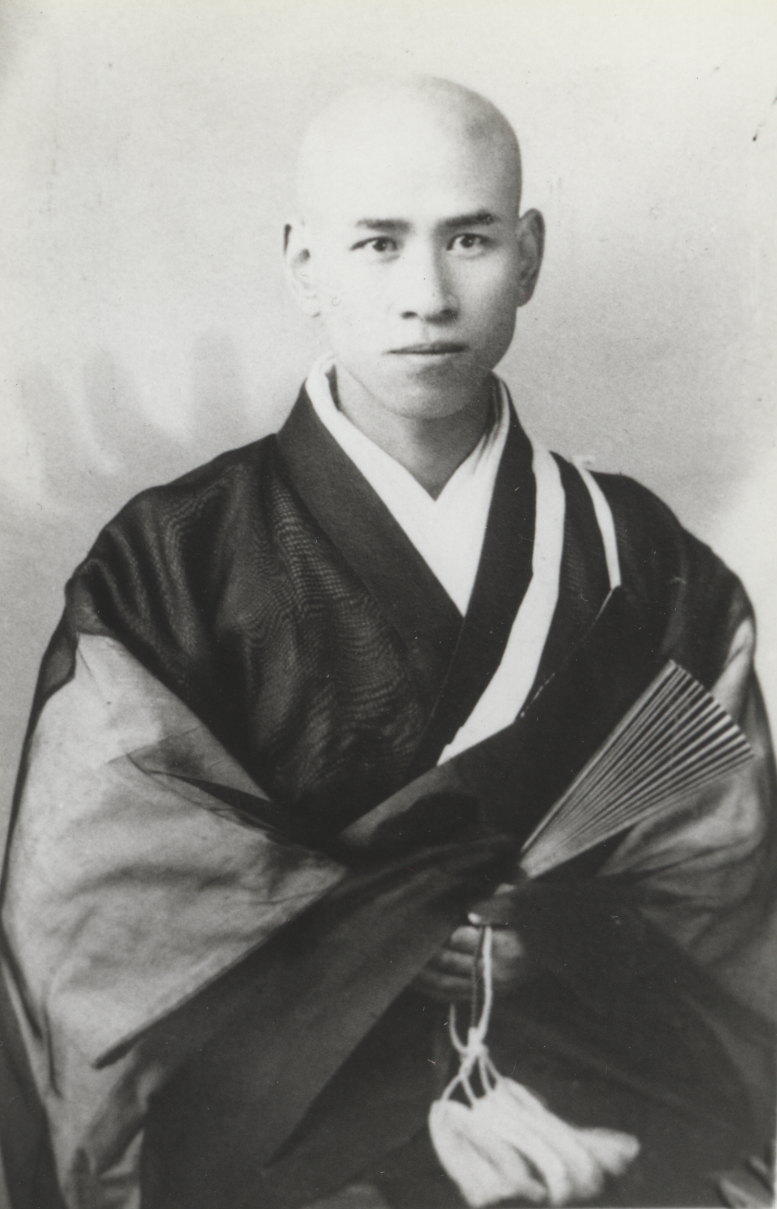
Yoshio Iwanaga (1900-1950) was a Japanese Buddhist minister who moved to California in 1930 and introduced doyo buyo (children’s dance) and Bon odori (Obon or Bon dance) to numerous communities along the North American West Coast. Obon dancing occurred on a small scale at kenjinkai (prefectural associations) and other Japanese American gatherings prior to Iwanaga’s arrival, but these occurrences remain largely undocumented. Following Iwanaga’s direction, Bon odori was recontextualized as a Jodo Shinshu Buddhist practice using select music and dances from across Japan. He taught Bon odori in California, Oregon, Washington, and British Columbia, and led two large performances of Bon odori in the 1940s at the International Exposition at Treasure Island and the fiftieth anniversary of the Buddhist Churches of America (BCA). He and his wife, Helen Chizuko Iwanaga, were appointed the directors of the Music and Recording Department of the BCA and completed a collection of gatha (Buddhist hymn) records just months before he passed away in May 1950.
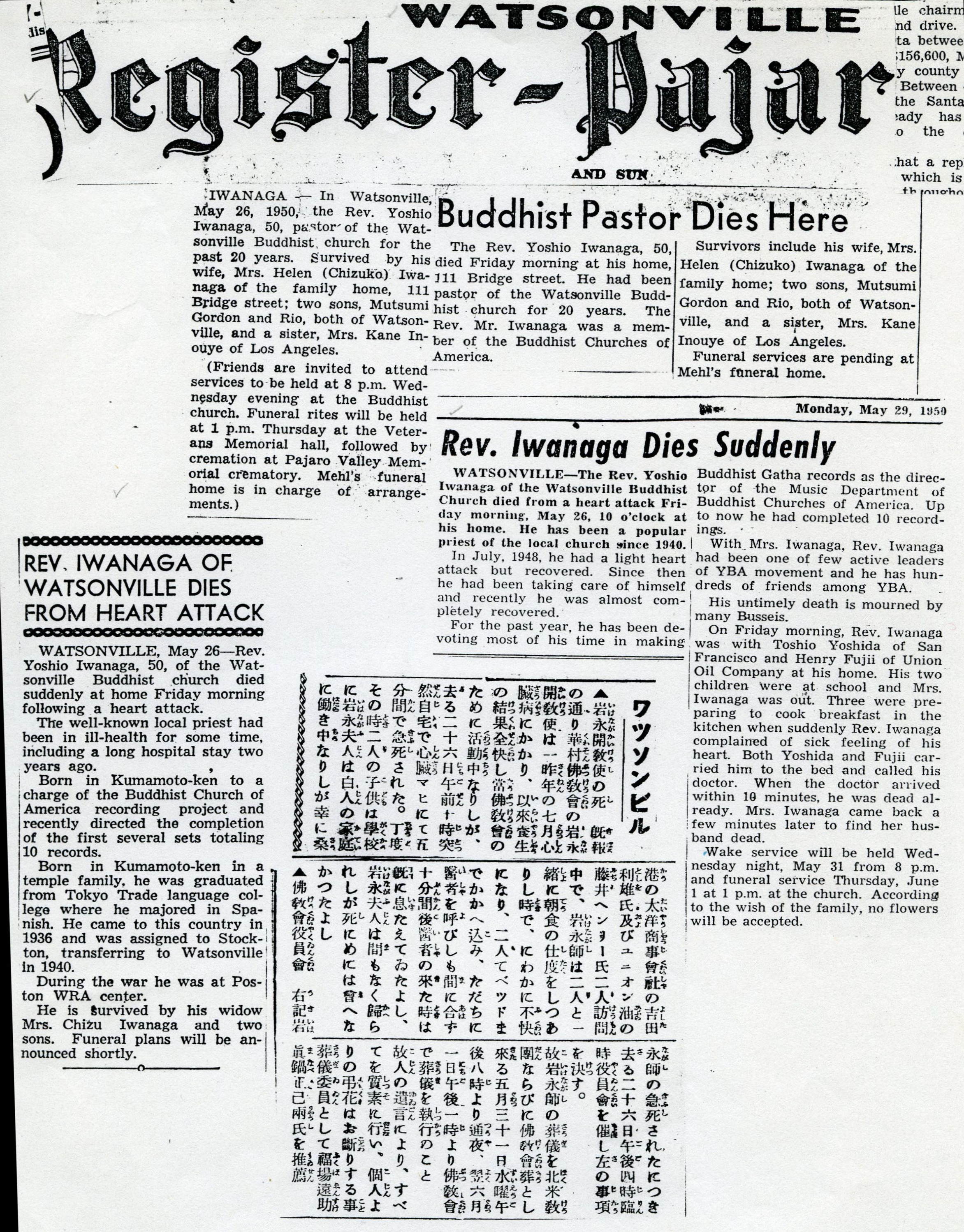
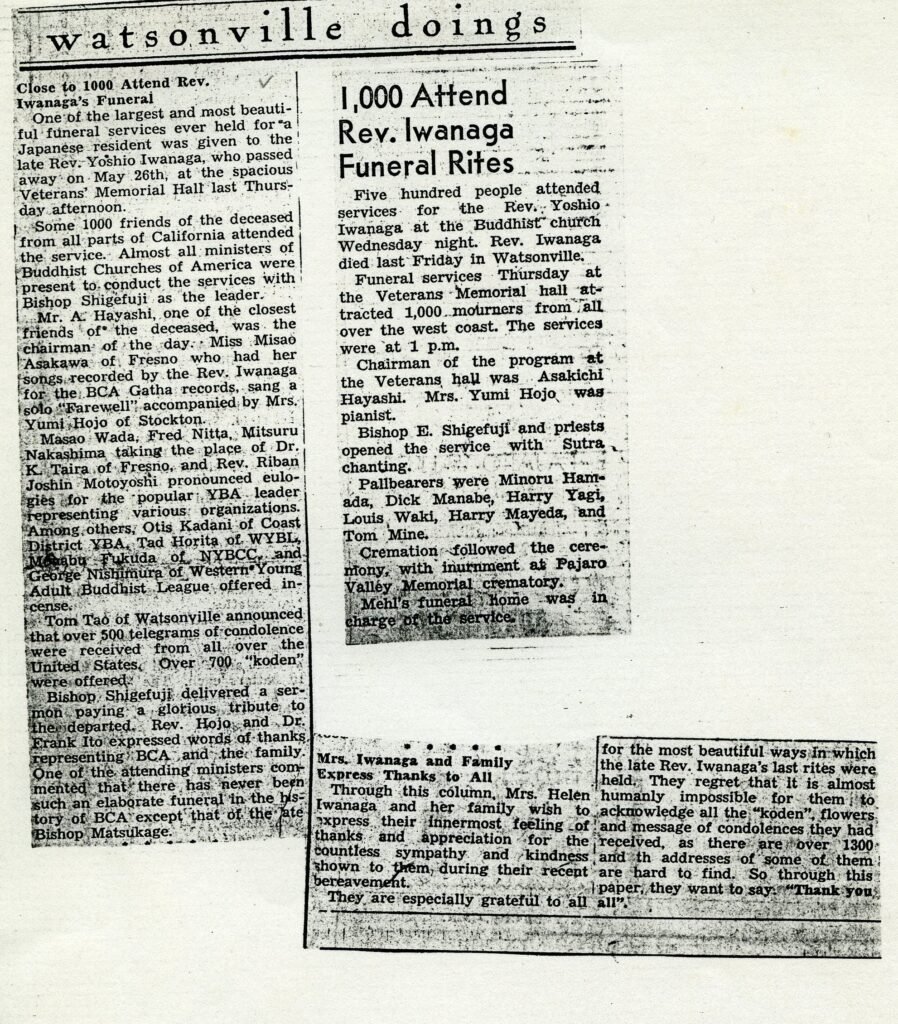
Telegrams of condolences were received from across the United States and virtually every BCA minister attended his funeral. Iwanaga was remembered as a popular and progressive minister, beloved by all, with an irresistible wide grin and light dancing feet. His contributions to music and dance within the Japanese American Buddhist community were widely acknowledged and the continued popularity of Bon odori in North America is due in large part to Reverend Iwanaga’s pioneering activities.
In the late 1980s, graduate student Linda Akiyama interviewed Mrs. Helen Chizuko Iwanaga for a thesis on Reverend Iwanaga and acquired a collection of family photos. In 2014, Akiyama gave these photos to Wynn Kiyama, assistant professor of music at Portland State University (PSU). Kiyama collaborated with Akiyama and Reiko Iwanaga (daughter-in-law of Rev. Iwanaga) to make these photos available online through PSU (2015-25) and the American Bon Dance Magazine (2026-present).
Japan, 1920s
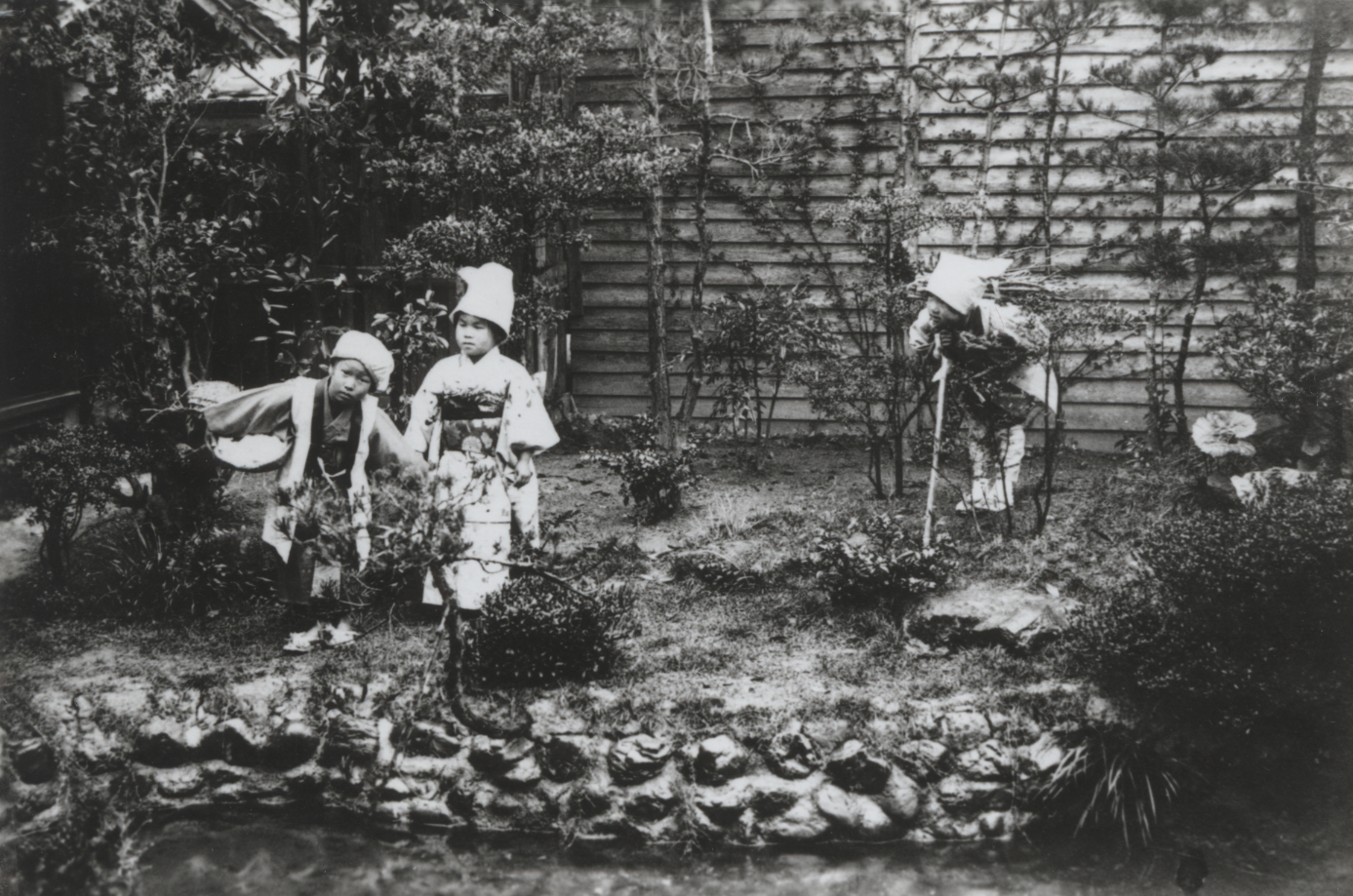
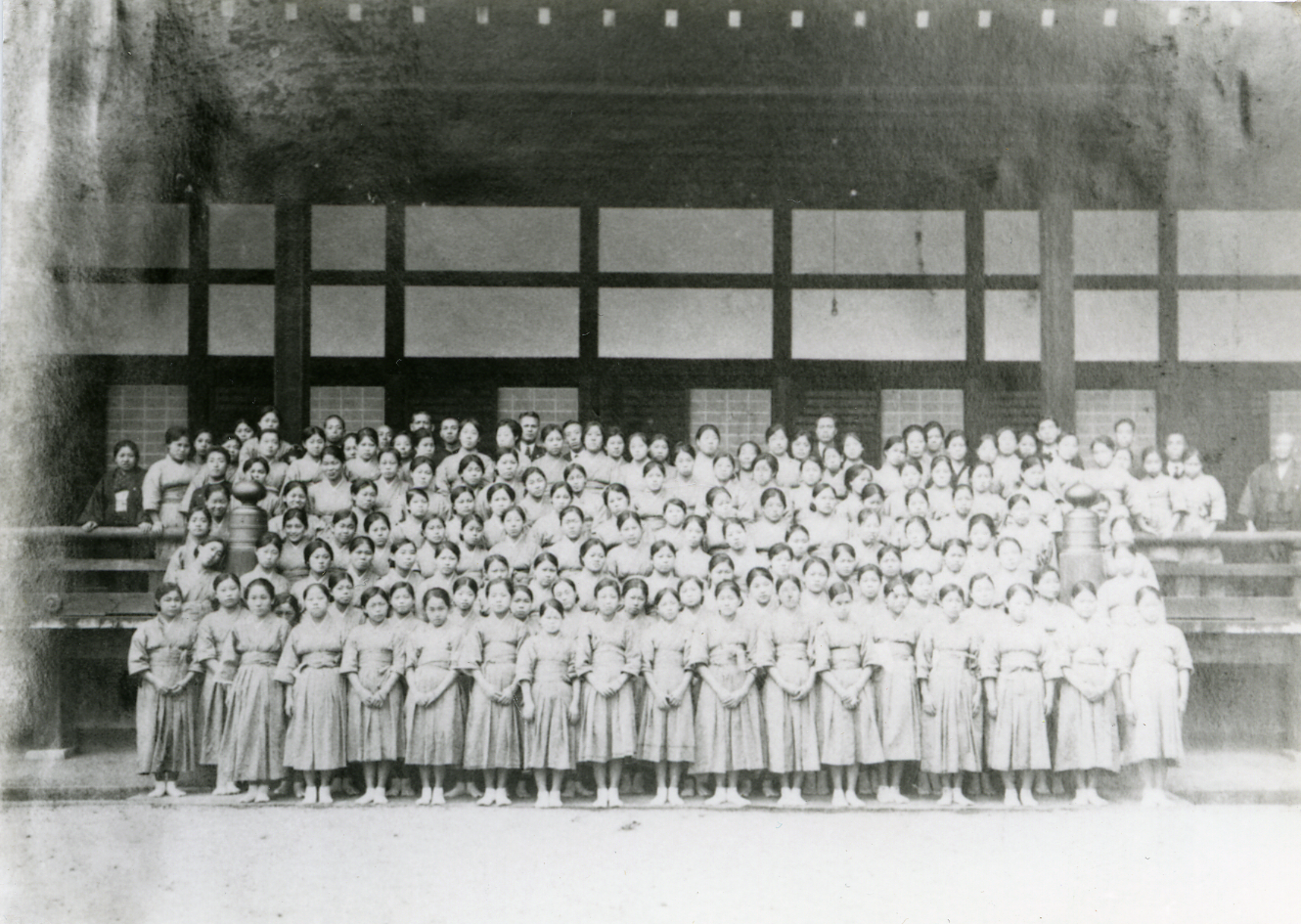
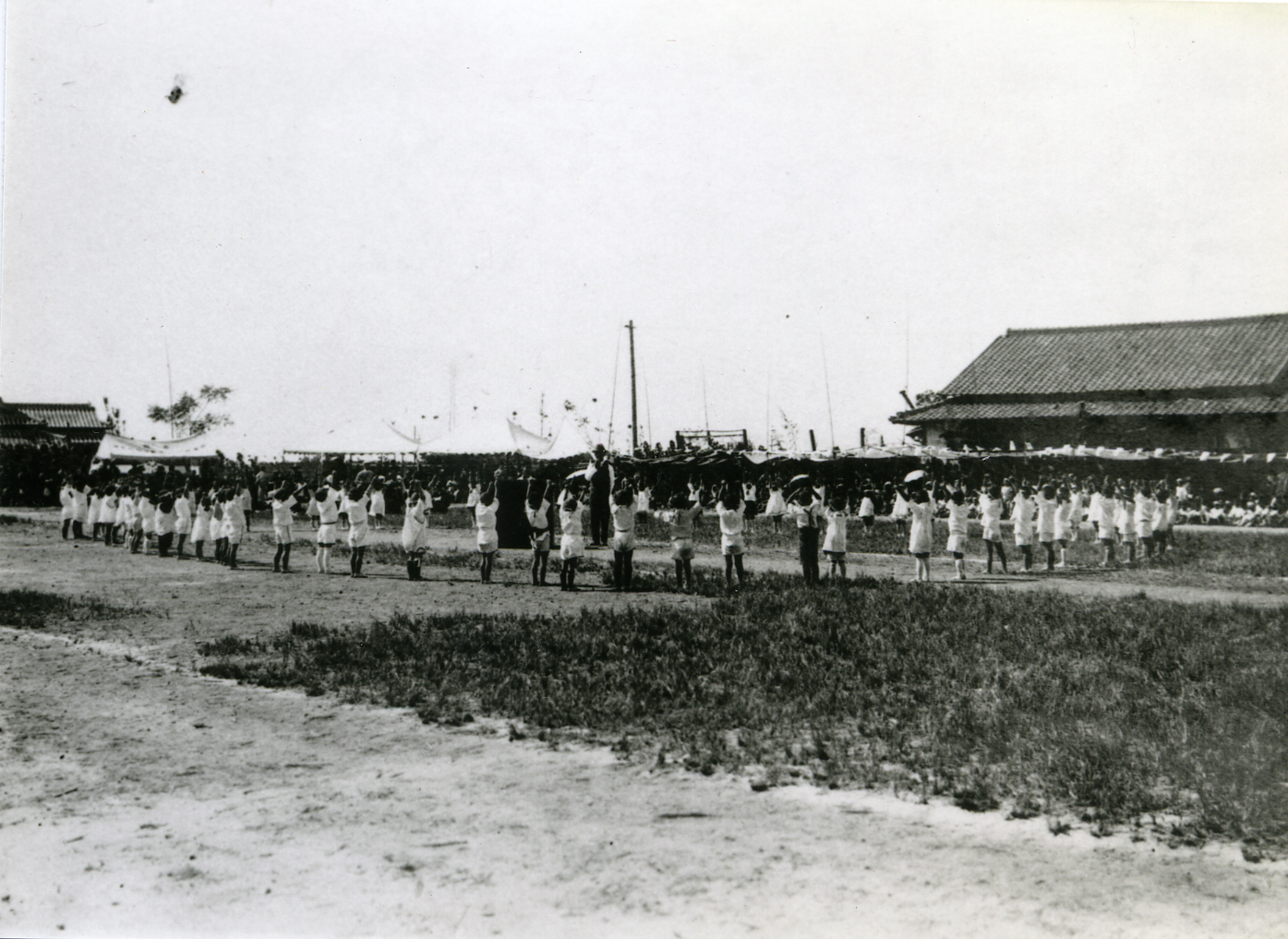
Yoshio Iwanaga was born in the village of Miyauchi within the Kamimashiki district of Kumamoto prefecture on April 29, 1900. He attended the local grammar school and studied Spanish at the Tokyo Trade Language School. After an illness and a brief conversion to Christianity, he returned to his familial religion of Jodo Shinshu Buddhism and received the tokudo (initial ordination as a Buddhist minister) through the Nishi Hongwanji in Kyoto. During this time, he developed a pedagogical program for elementary school children and female factory workers consisting of Buddhist lectures and instruction in Japanese music and dance.


Move to the United States, 1930
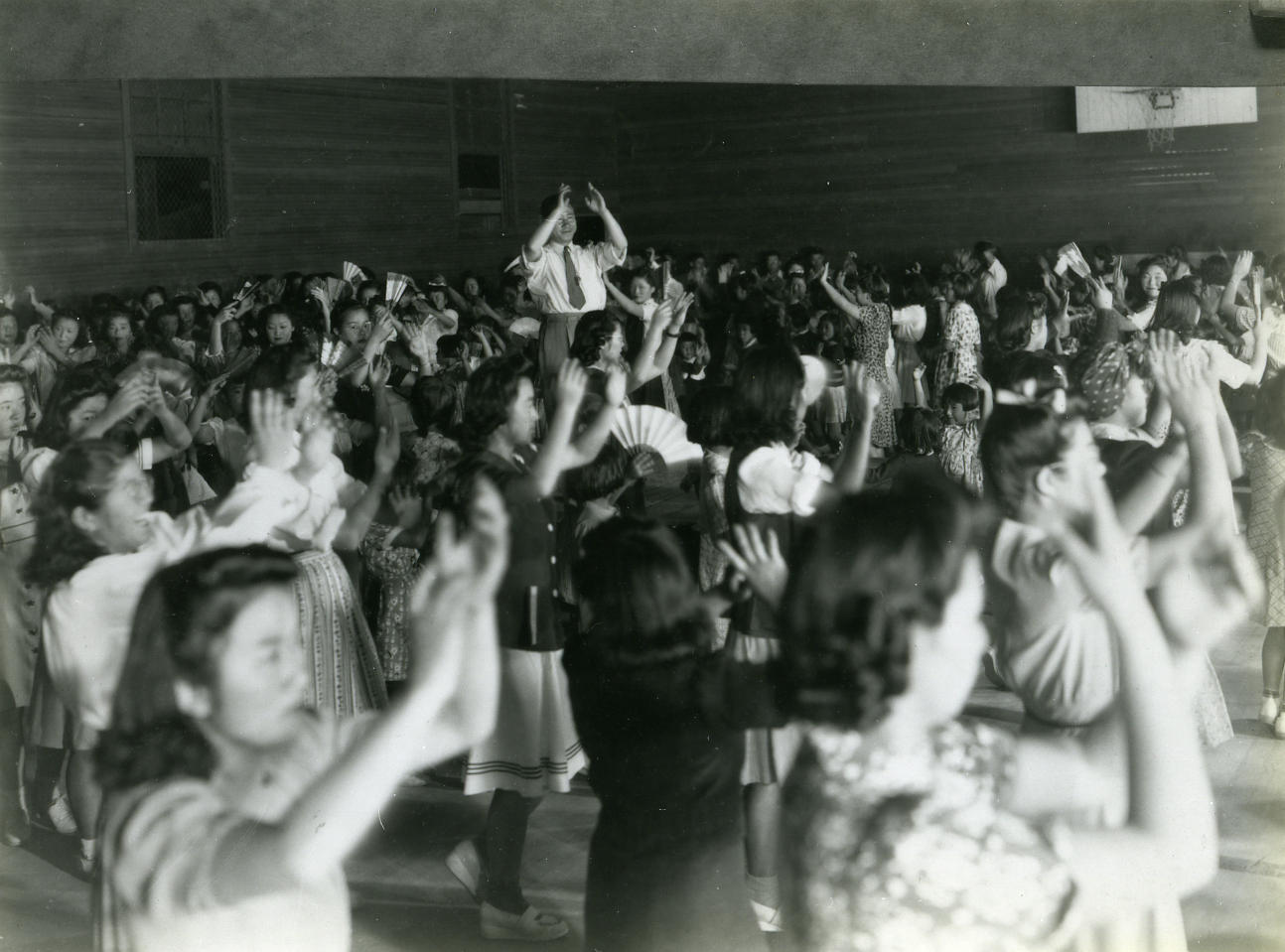
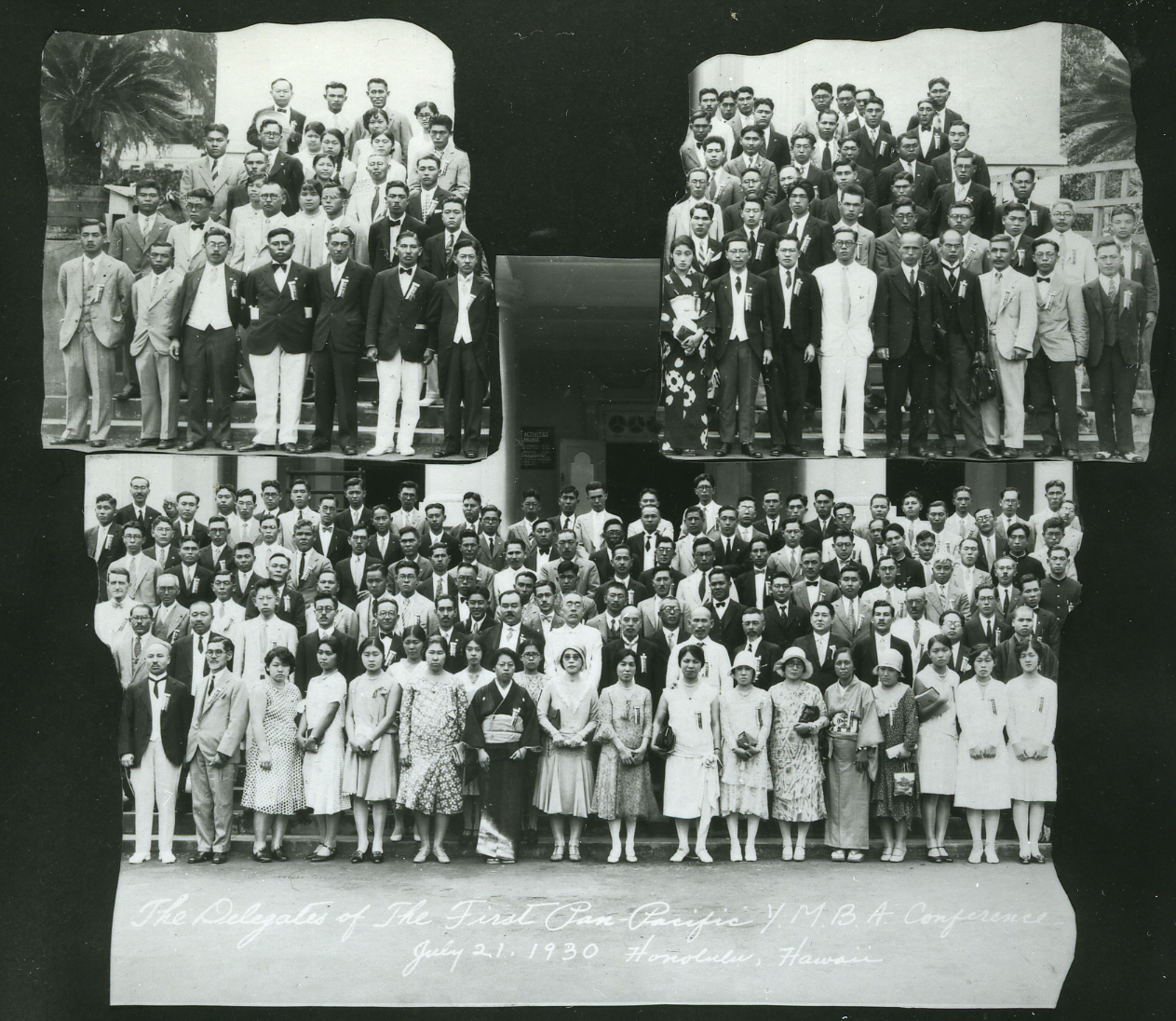
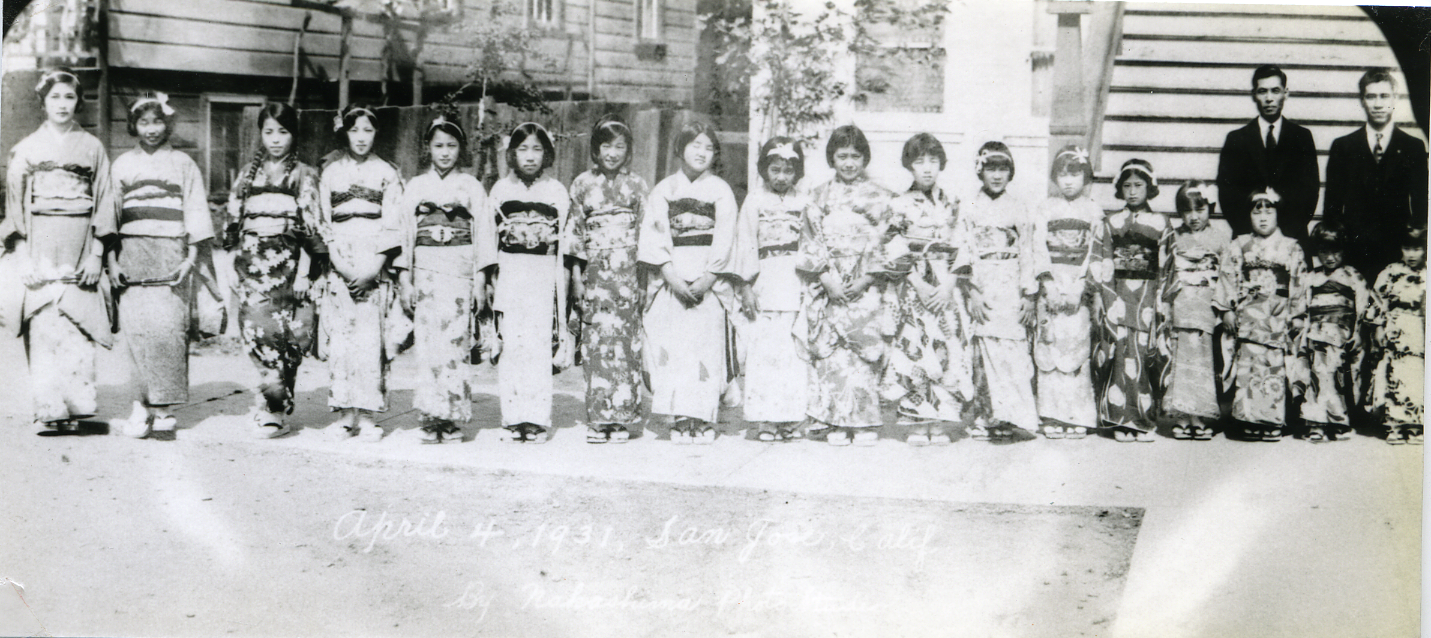
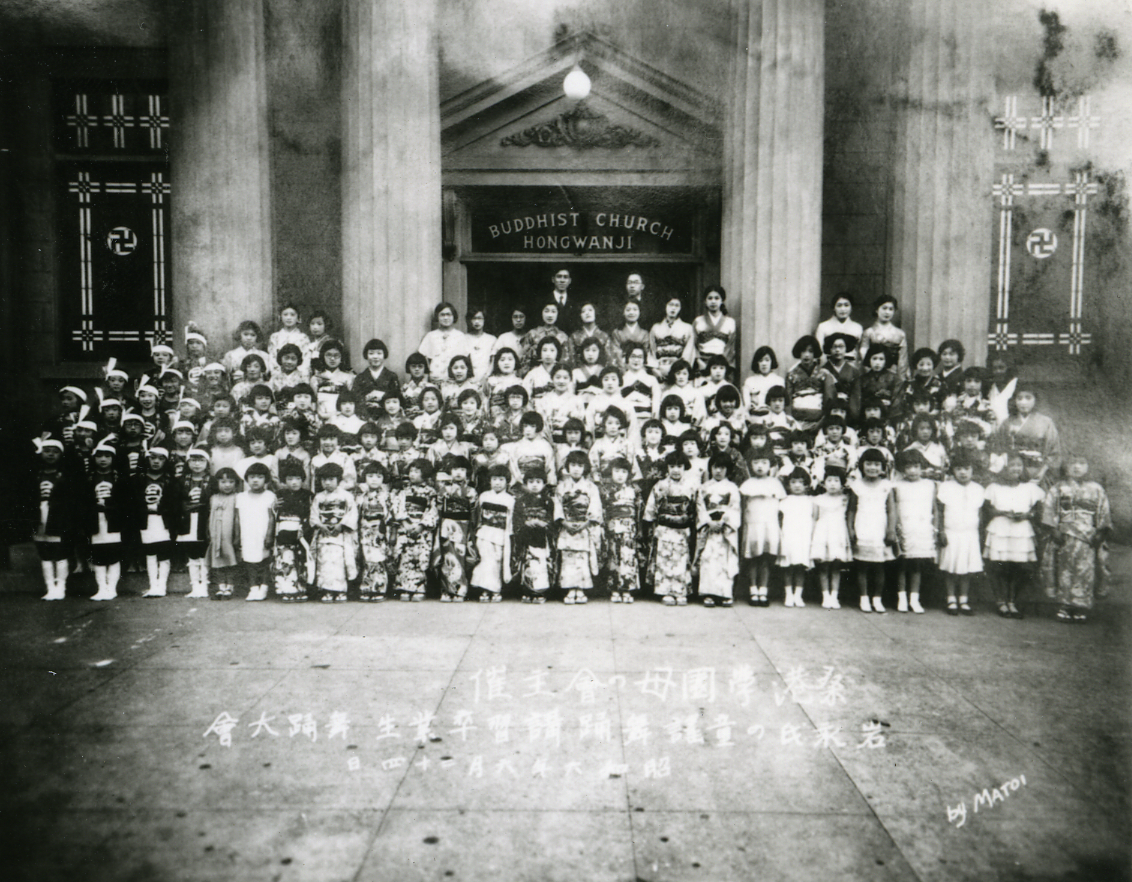
Reverend Iwanaga demonstrated his pedagogical program at the Pan-Pacific Young Men’s Buddhist Association conference in Hawai‘i in 1930. Reverend Tansai Terakawa, representing the Buddhist Church of Stockton and the Buddhist Churches of America (BCA), was impressed with the young minister and invited him to teach dance to nisei (second-generation) Japanese American girls in California. Iwanaga applied for a visa and traveled directly to Stockton, where he worked with Helen Chizuko Okamoto, a nisei pianist and organist who accompanied his dance classes. He taught doyo buyo to students in Central California, San Francisco, San Jose, and Los Angeles. According to interviews conducted in the 1980s, the first Obon festival with Bon odori in the BCA occurred at the Buddhist Church of San Francisco in 1931, following the instruction of Reverend Iwanaga.
Los Angeles, 1931-33
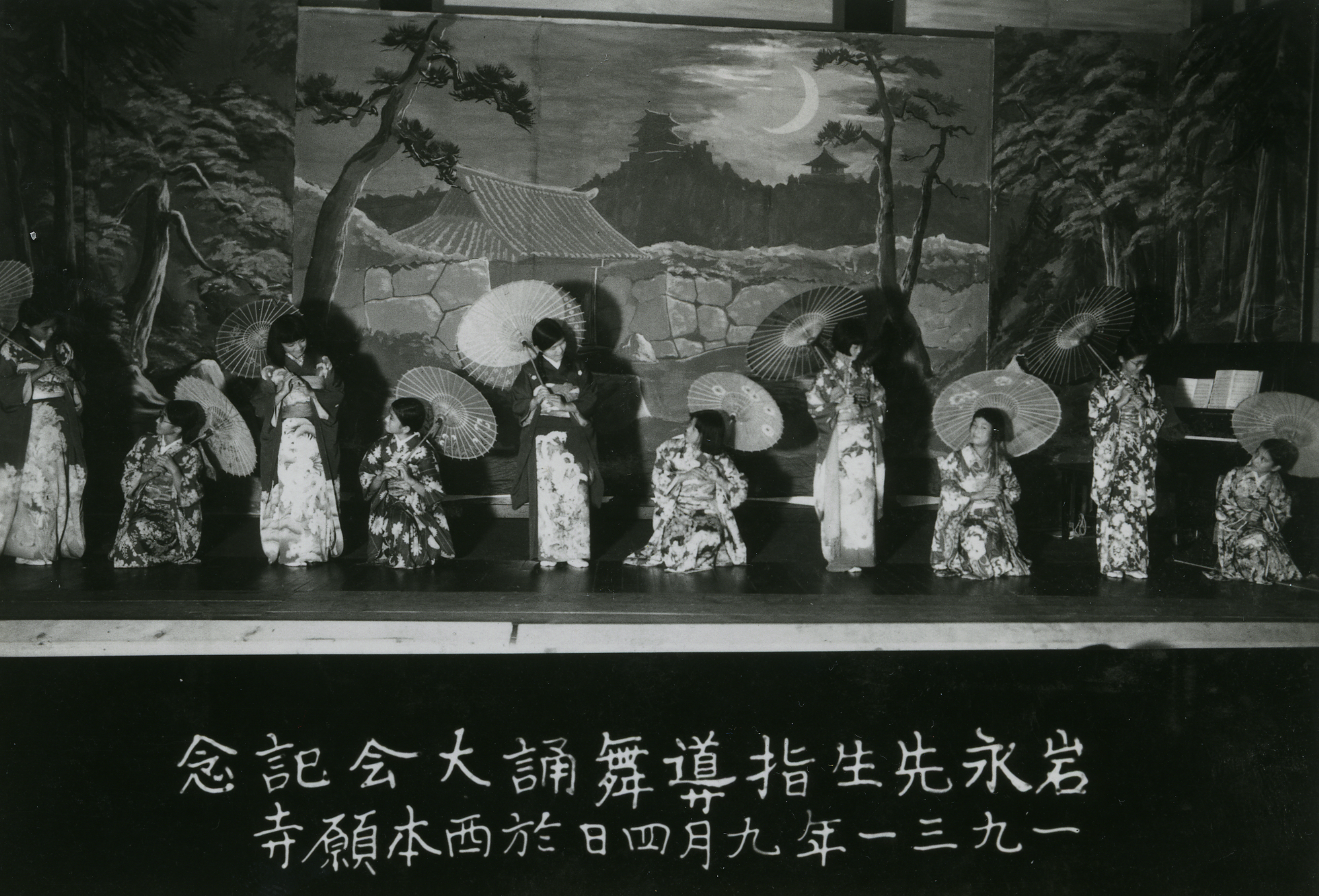
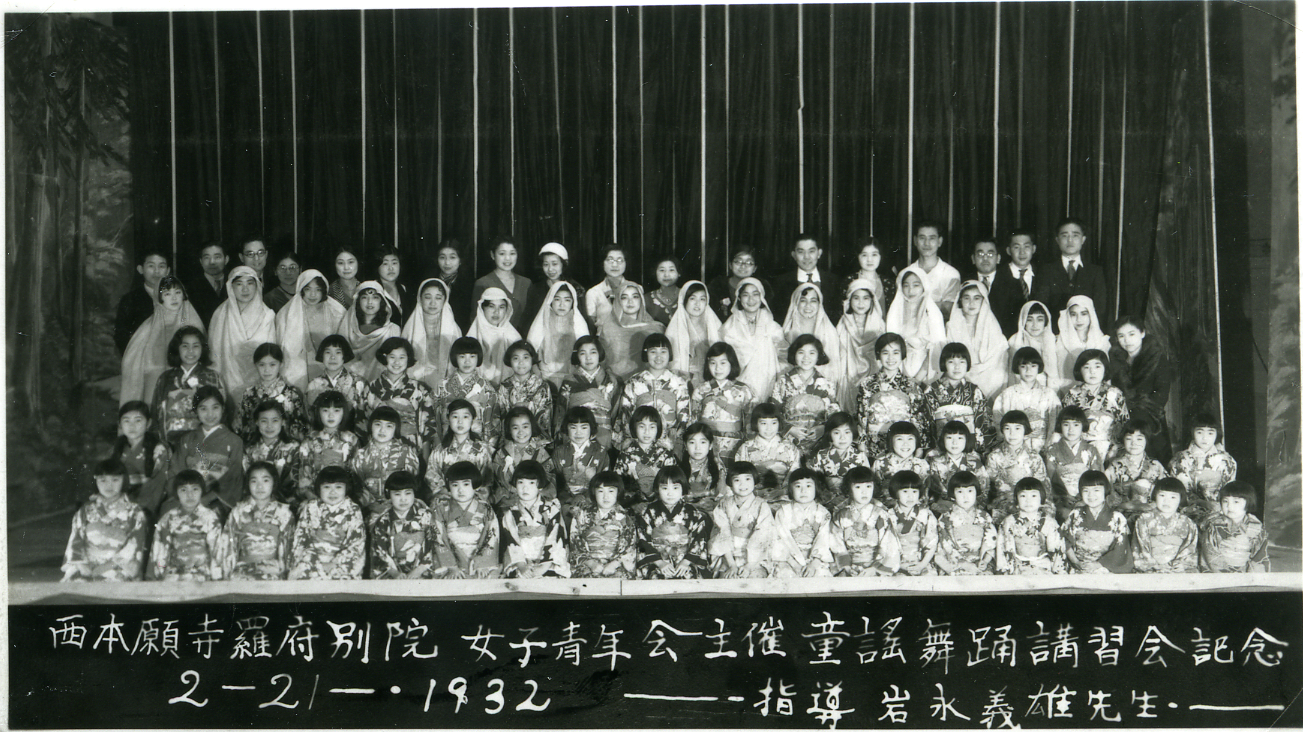
Between 1931 and 1933, Iwanaga was assigned to the Nishi Hongwanji (Los Angeles Hompa Hongwanji Betsuin), where he organized elaborate doyo buyo recitals and taught Bon odori. In the summer of 1932, he traveled back to Japan where he enrolled in the Hanayagi School of Dance and was elevated to the kyoshi level (ministerial certification) in the Nishi Hongwanji in Kyoto.

Pacific Northwest and California, 1933-34
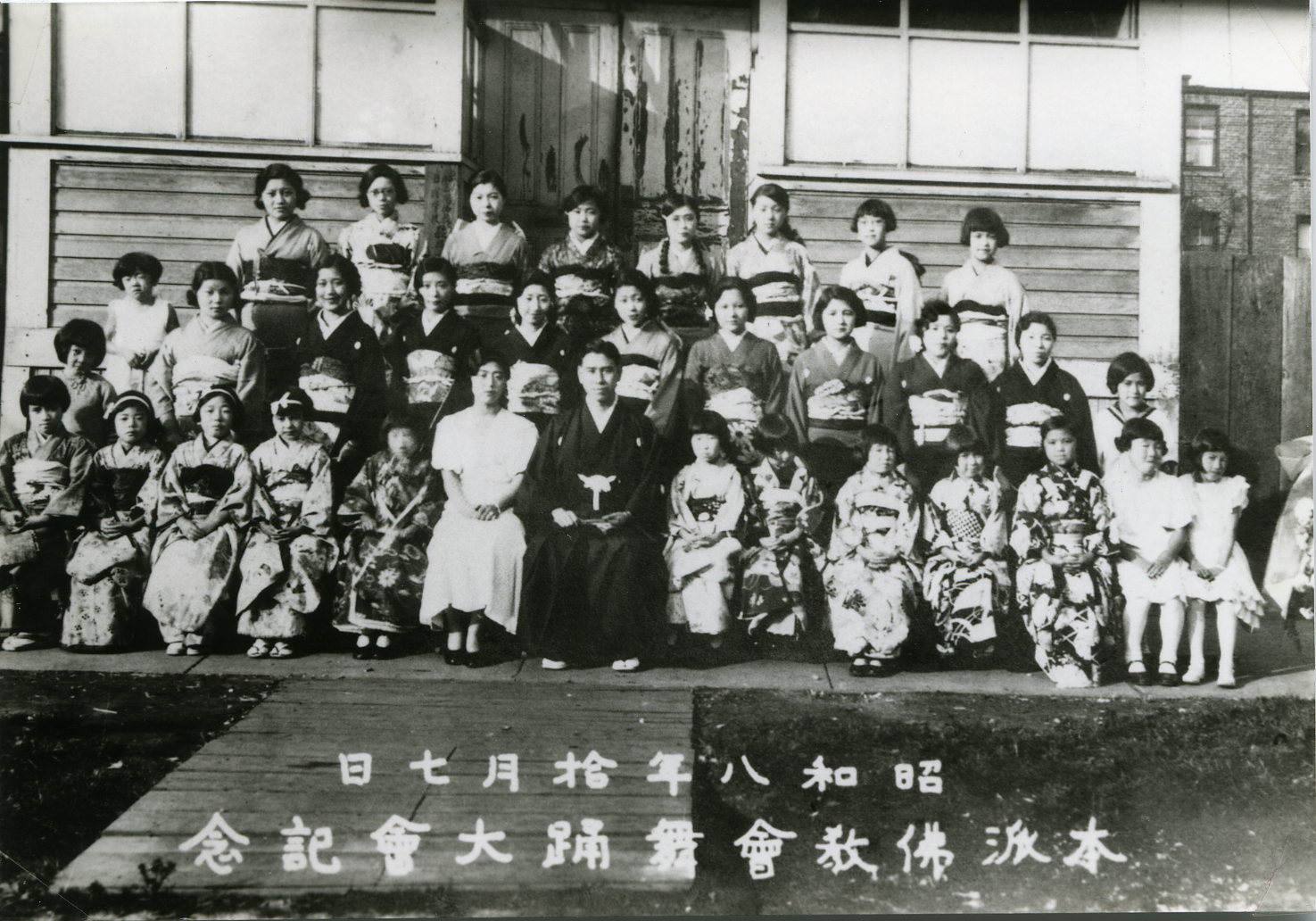
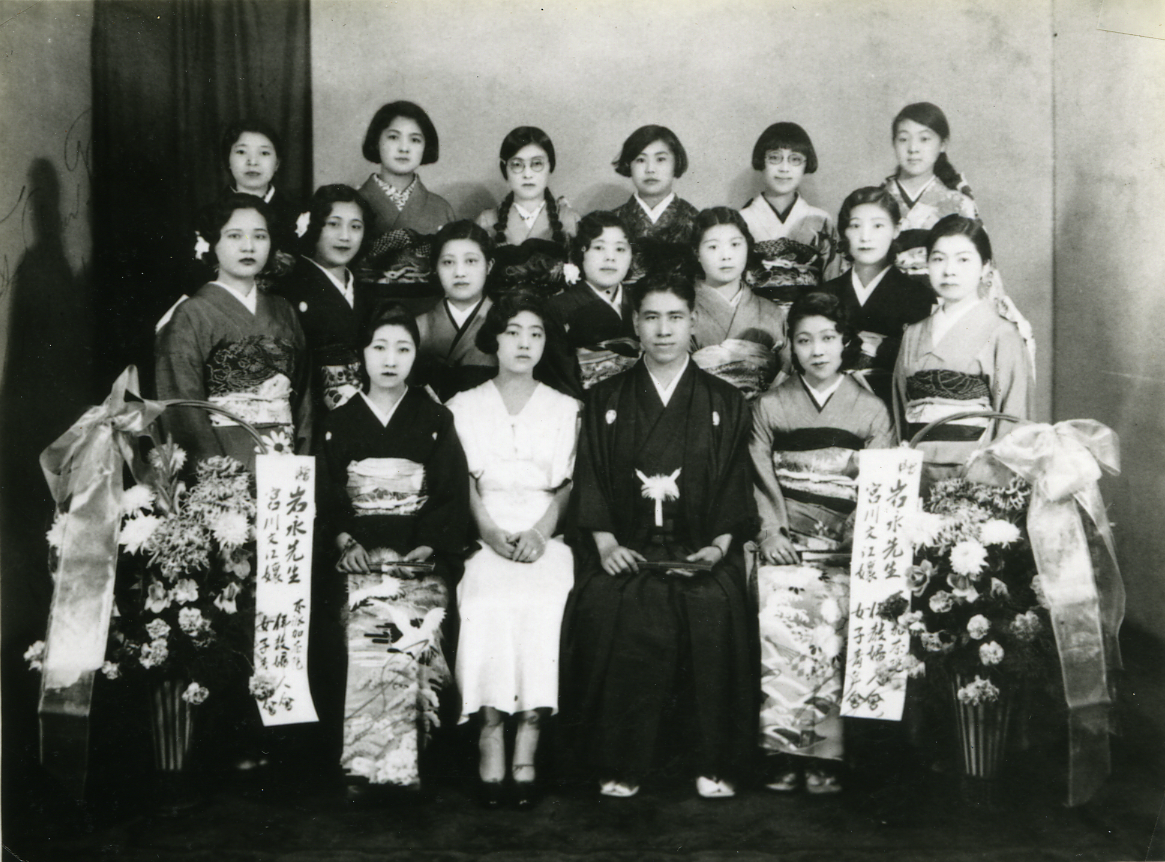
Iwanaga returned to the United States in October 1933 and taught dance in California, Oregon, Washington, and British Columbia. He made an additional seven-month trip to Japan starting in September 1934 before taking up residence in Stockton.
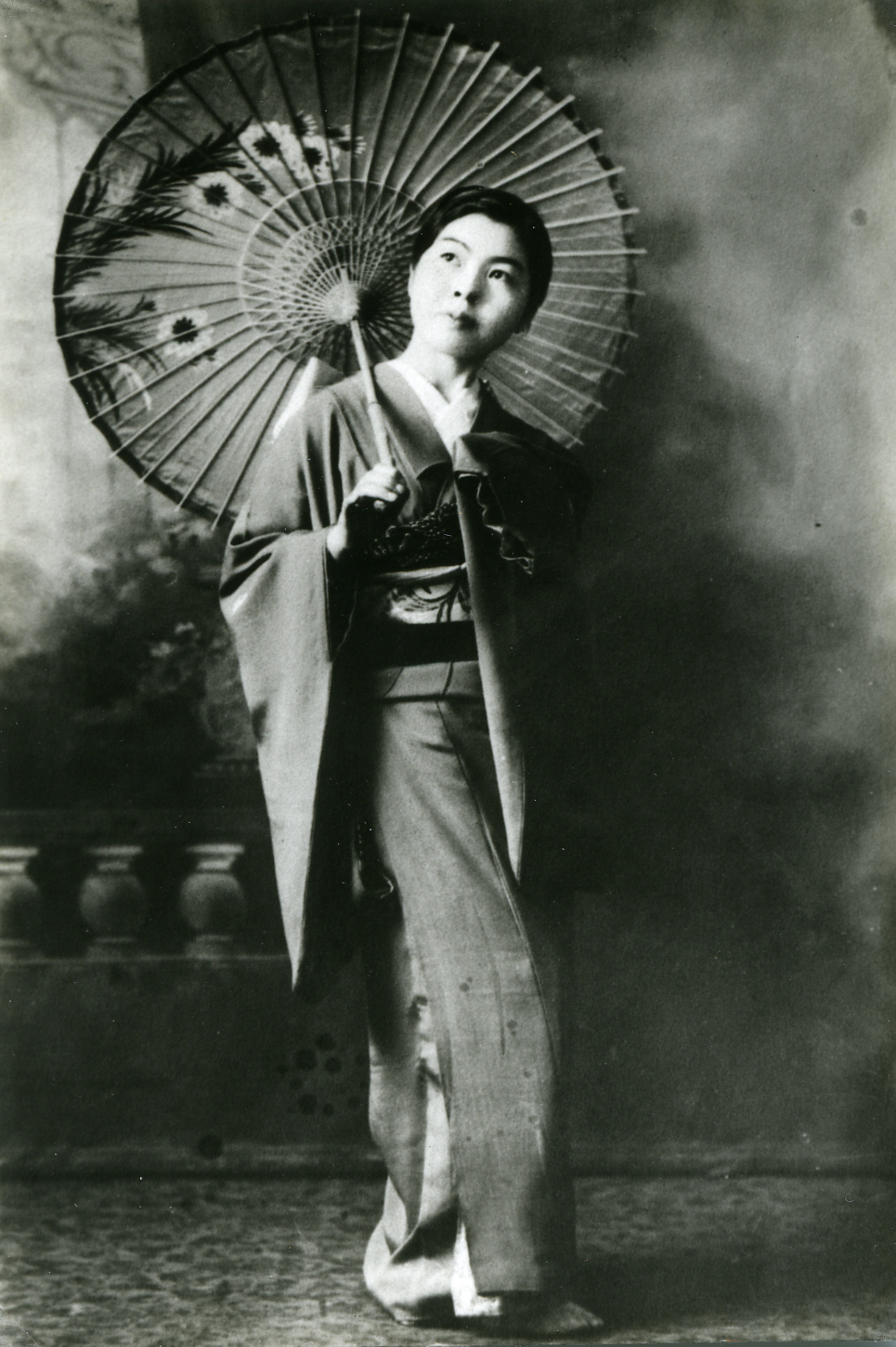
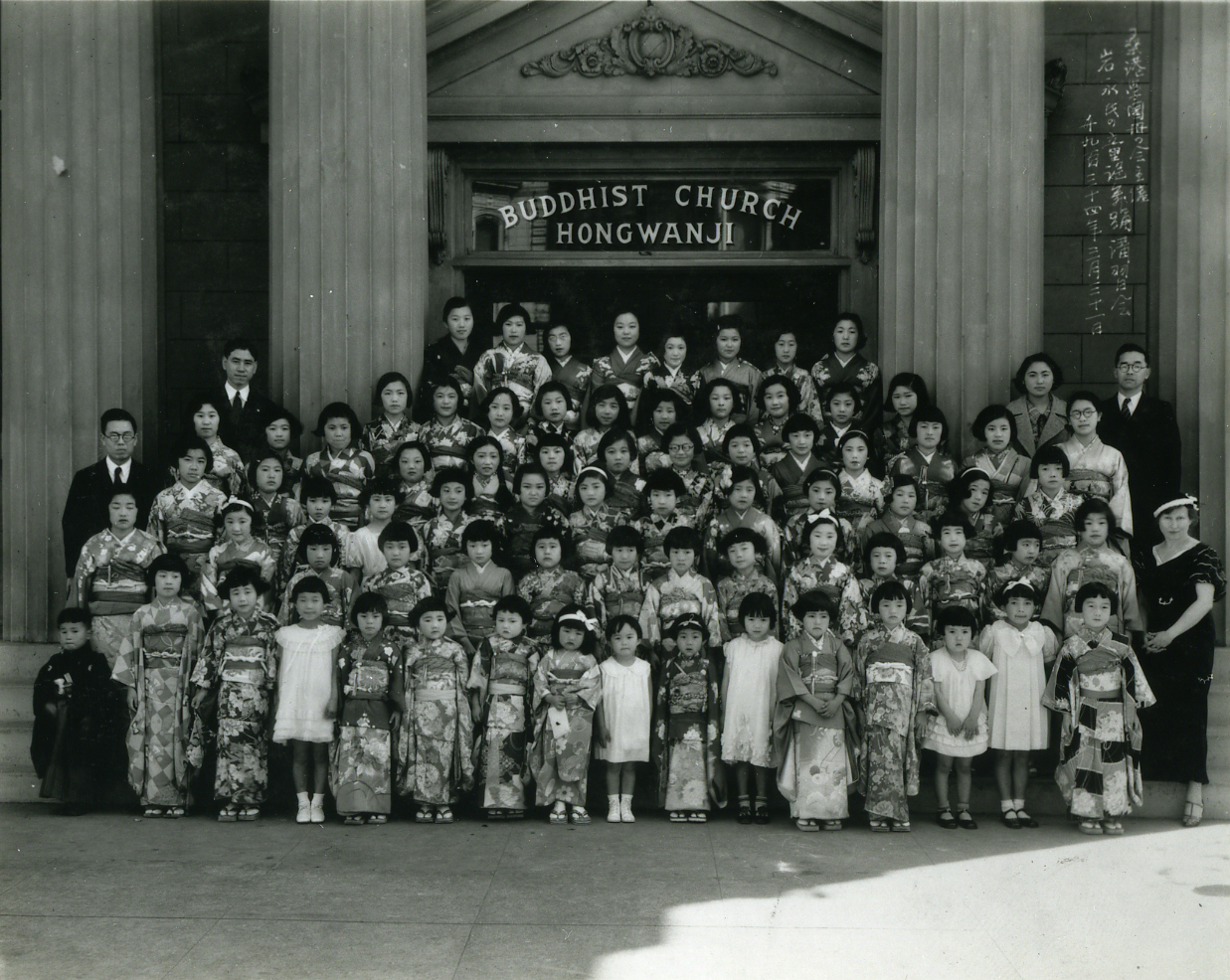
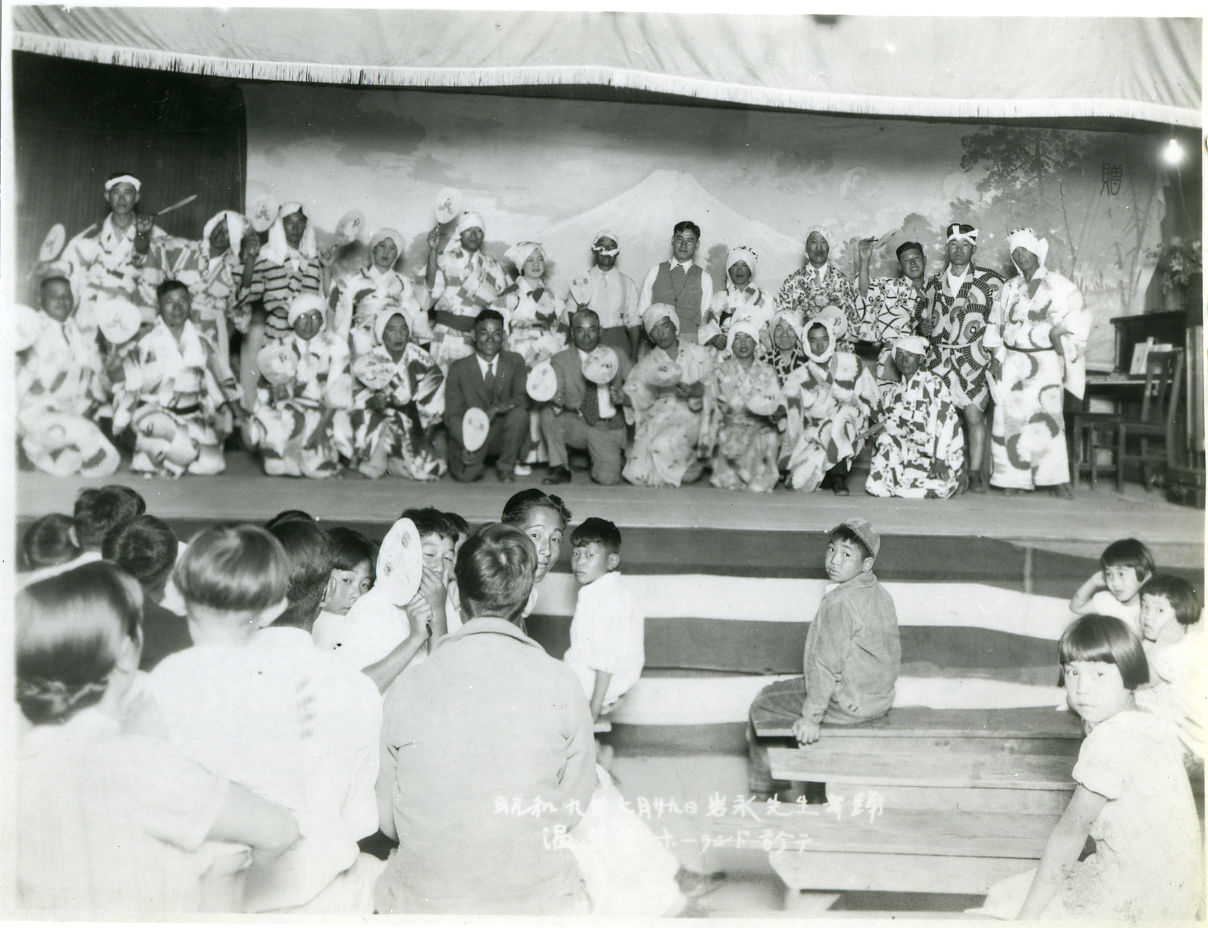

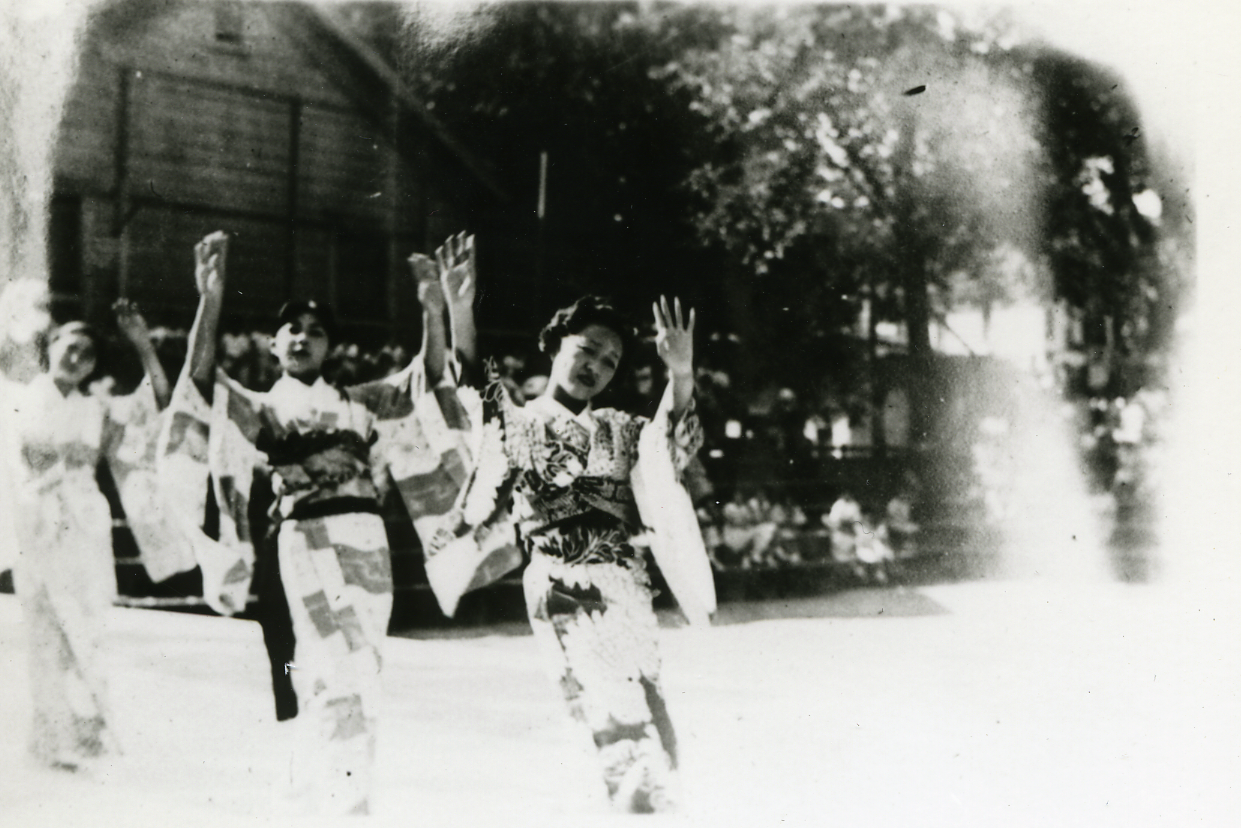
Stockton, 1930s
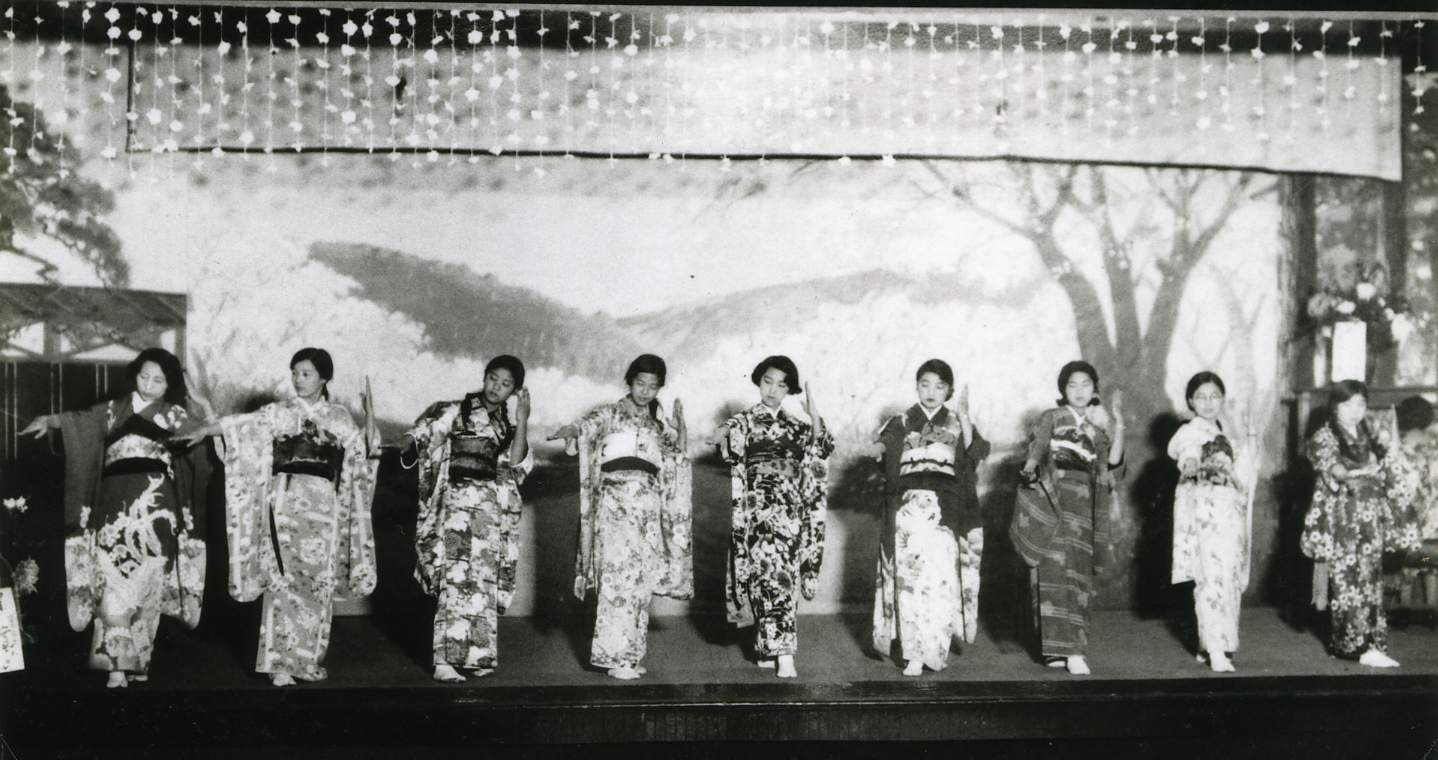
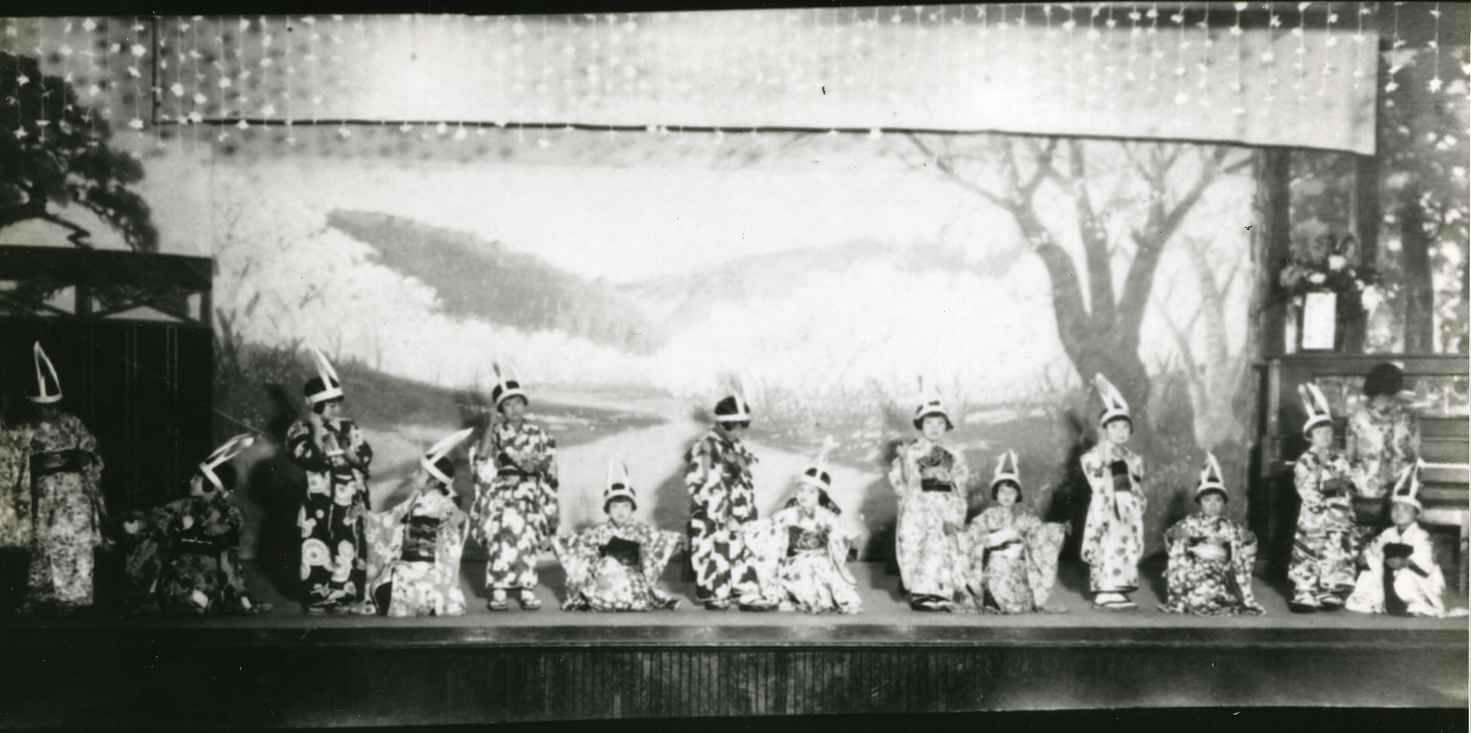
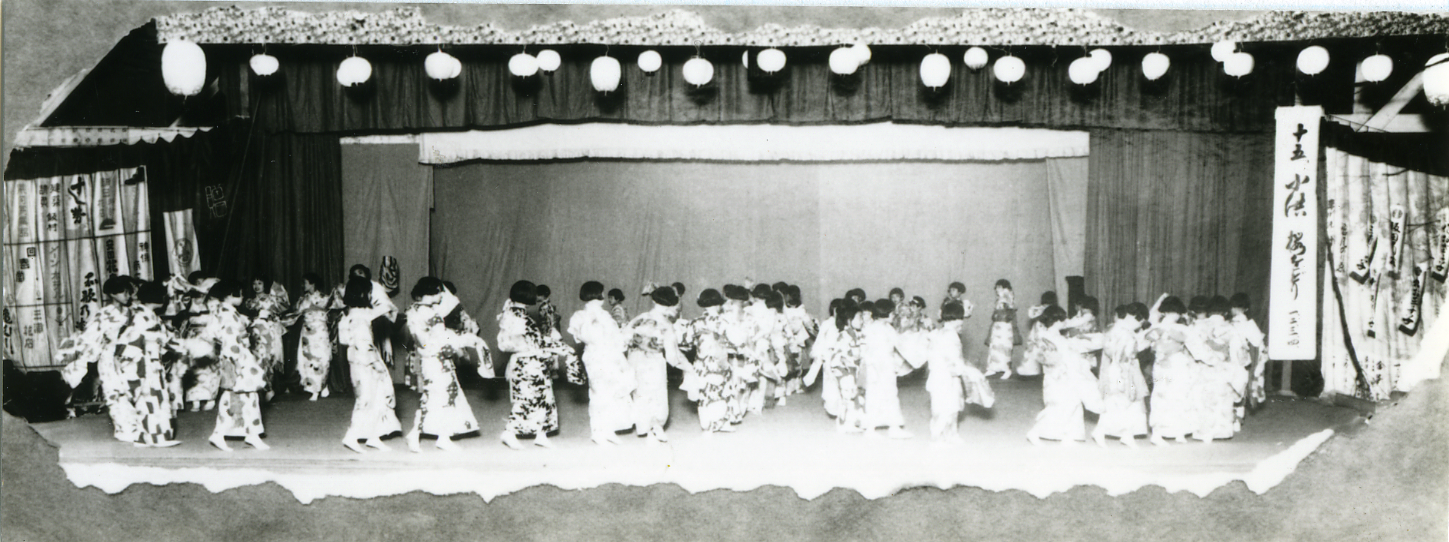
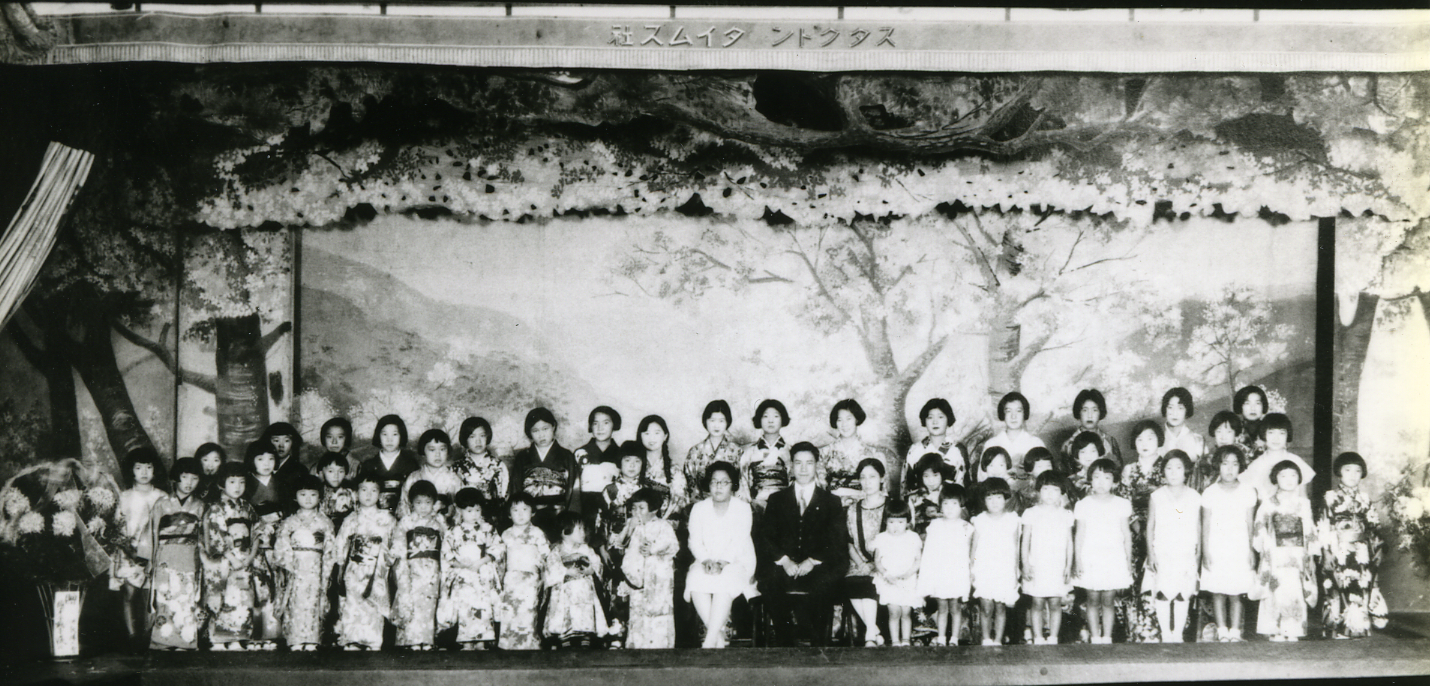
In 1935, Iwanaga was appointed head minister of the Stockton Buddhist Temple and married his longtime collaborator Helen Chizuko Okamoto. The couple would later have two sons, Mutsumi (b. 1938) and Rio (b. 1941). The last photo shows Reverend and Mrs. Iwanaga seated in the center.
Sacramento, 1930s
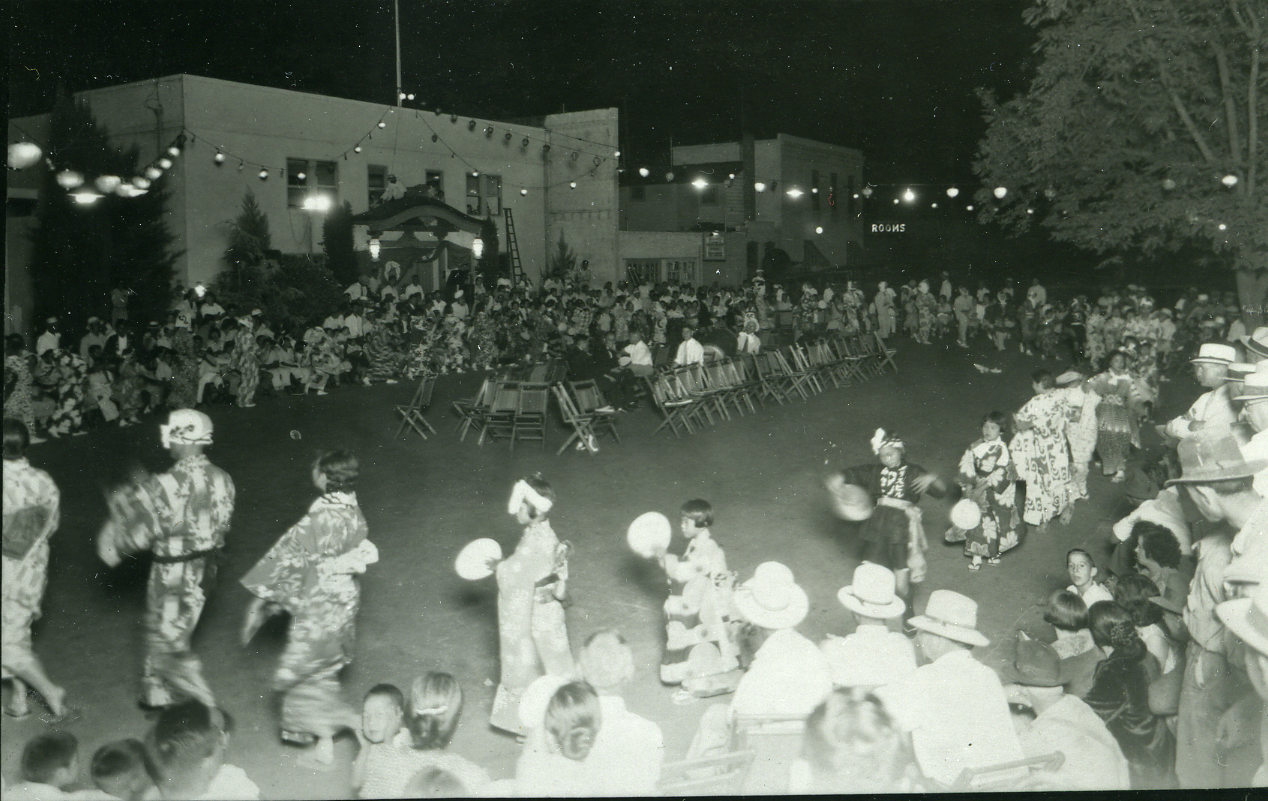
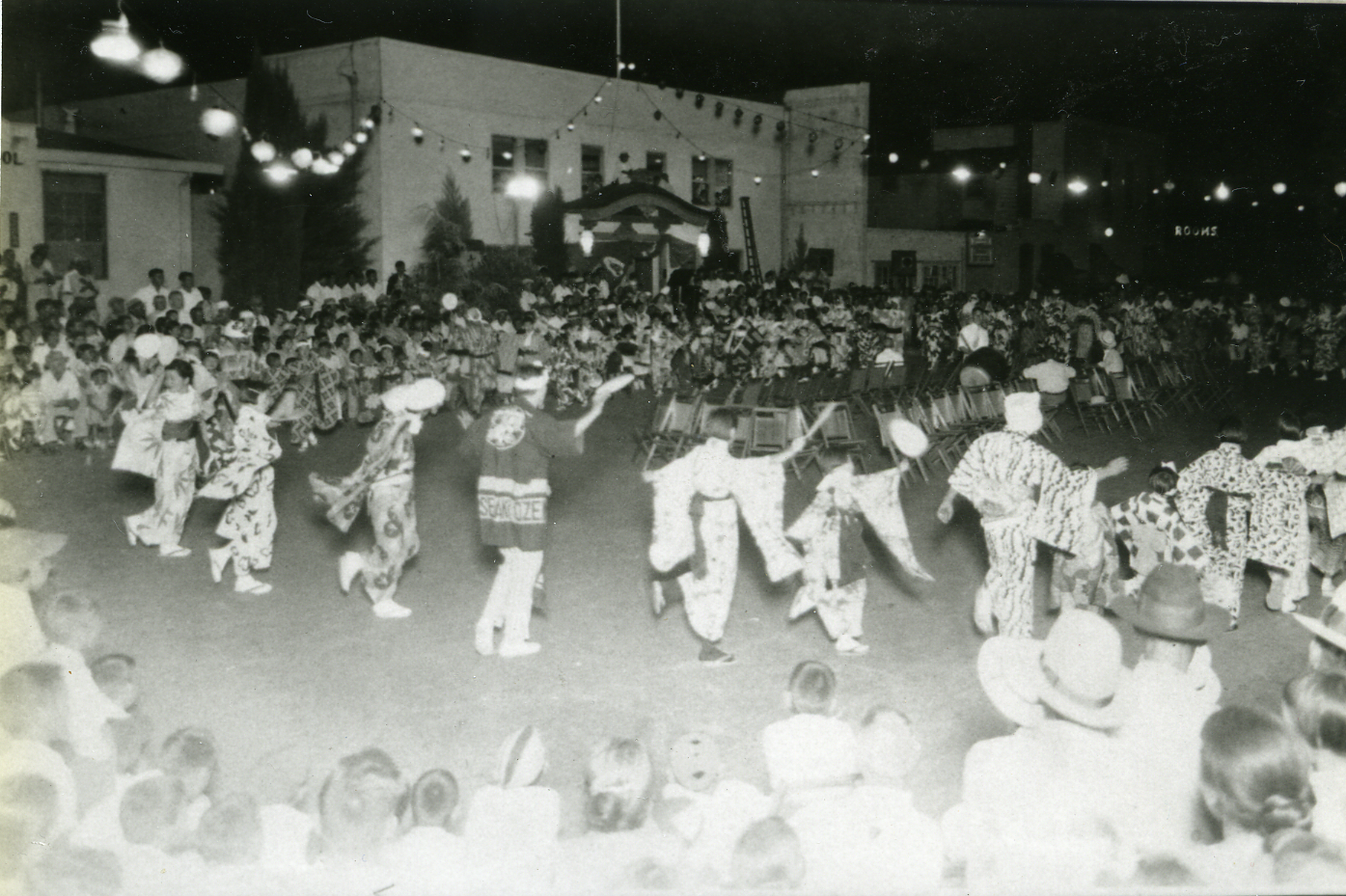
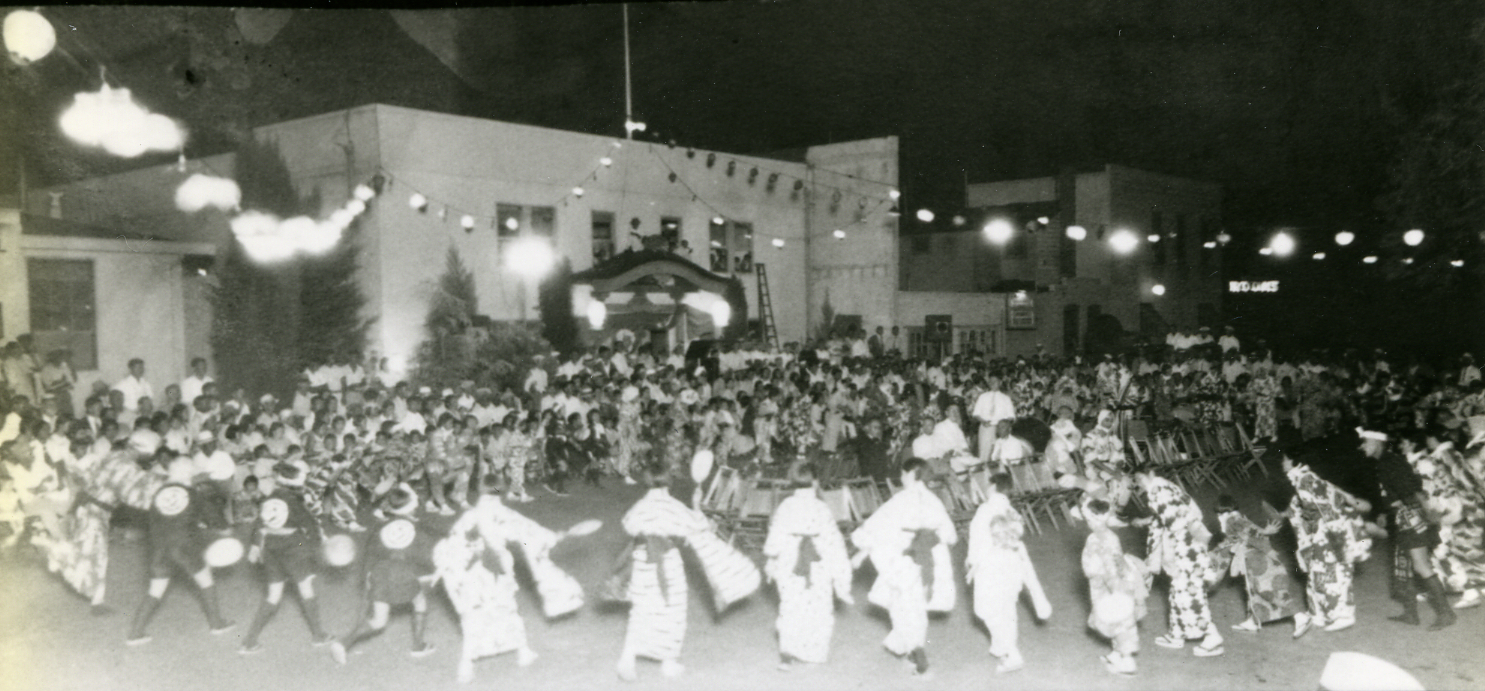
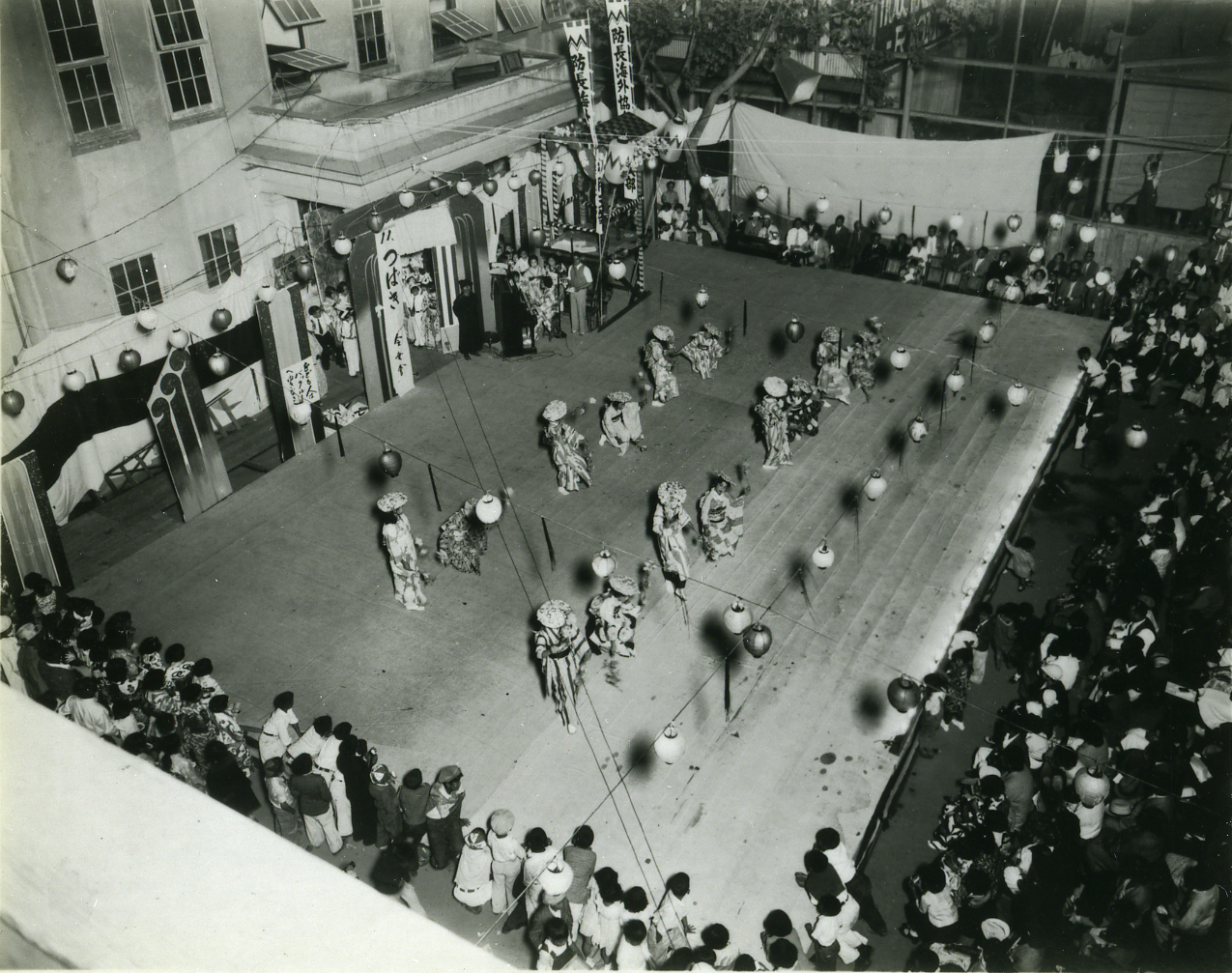
Iwanaga’s dance classes were popular in Sacramento and students came from as far as Vacaville and Penryn to participate. The annual doyo buyo recital was held outdoors on the same evening as the Obon festival. In the first three photos, an accompanying taiko (drum) can be seen amidst the chairs in the middle of the dance circle. The last two photos come from a later date after the temple members had constructed a stage and yagura (raised platform).
1940-50
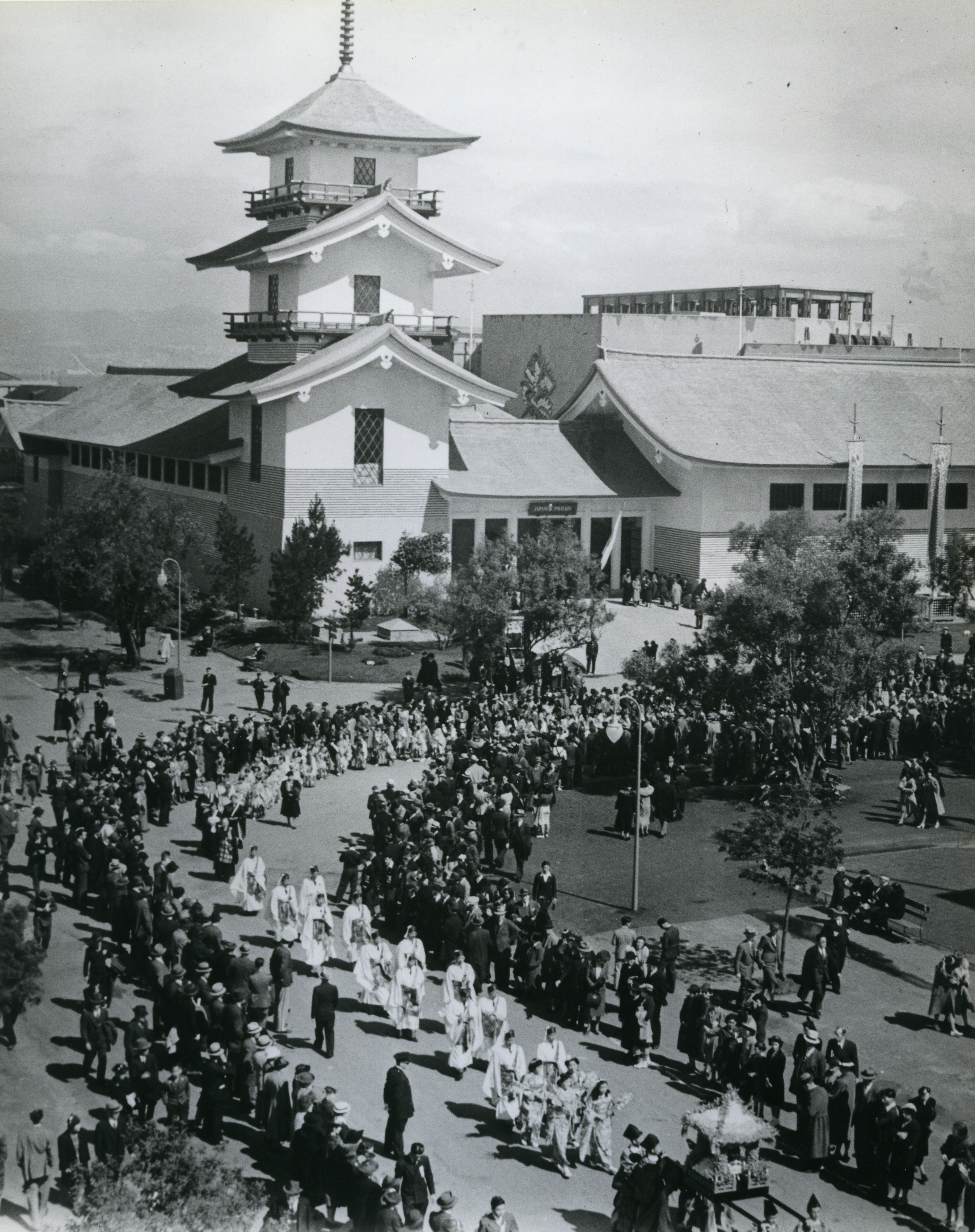
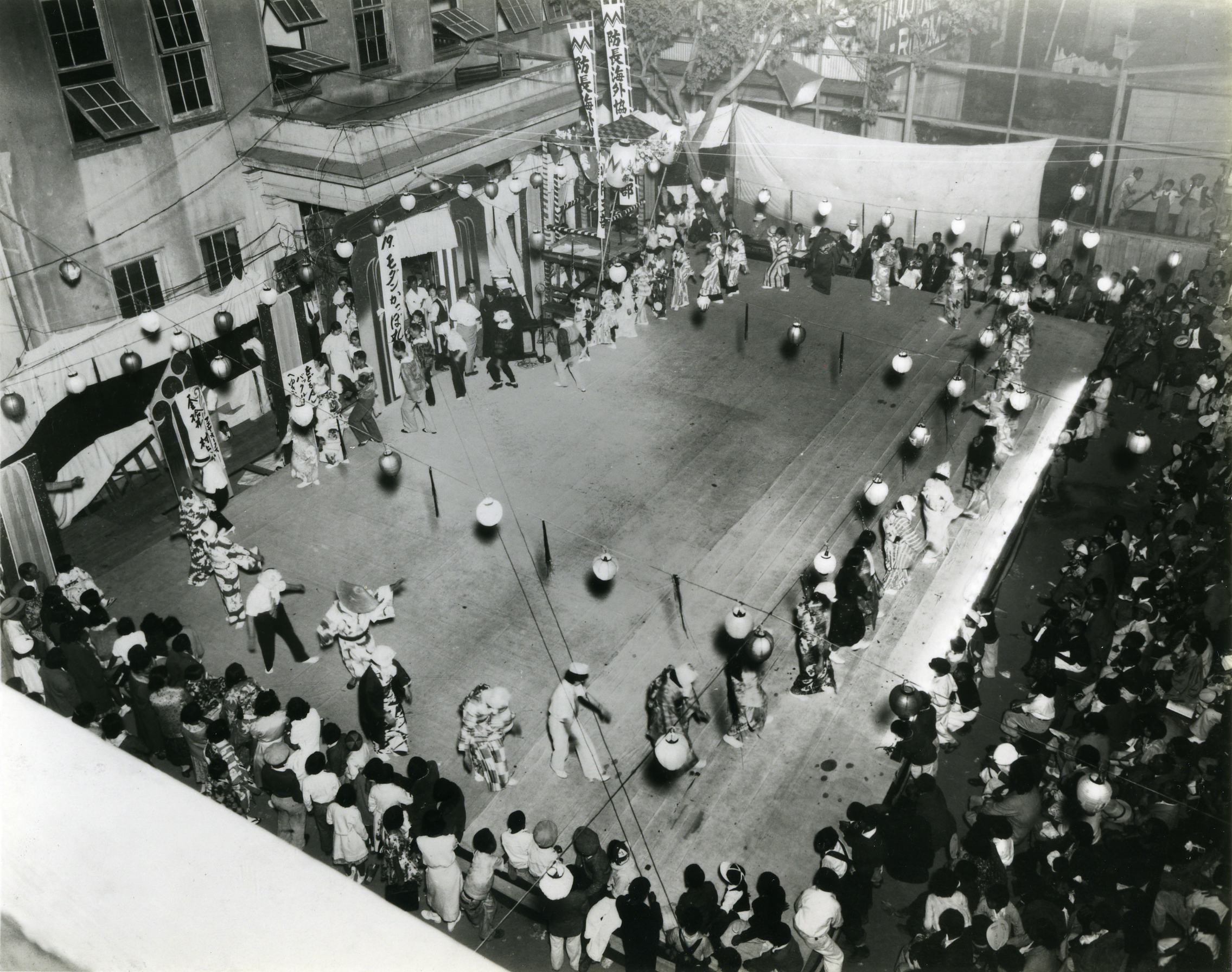
In 1940, Iwanaga led a group of approximately one thousand Bon odori dancers in a Buddhist Day Parade as part of the International Exposition at Treasure Island in San Francisco. After the signing of Executive Order 9066 and the forced eviction of people of Japanese descent from the West Coast, Iwanaga and his family were incarcerated at the Poston concentration camp in Arizona. Iwanaga suffered from ill health in the camp but resumed his ministerial duties after the war at the Watsonville Buddhist Temple in California. He organized another gathering of Bon odori dancers outside the San Francisco Civic Center in celebration of the fiftieth anniversary (“Golden Jubilee”) of the Buddhist Churches of America in 1948.
Iwanaga and his wife were appointed the directors of the Music and Recording Department of the BCA and completed a collection of gatha (Buddhist hymn) records just months before he passed away from a heart attack on May 26, 1950.